Project Case Study
Polysilicon Reduction Furnace Feed Skid Module
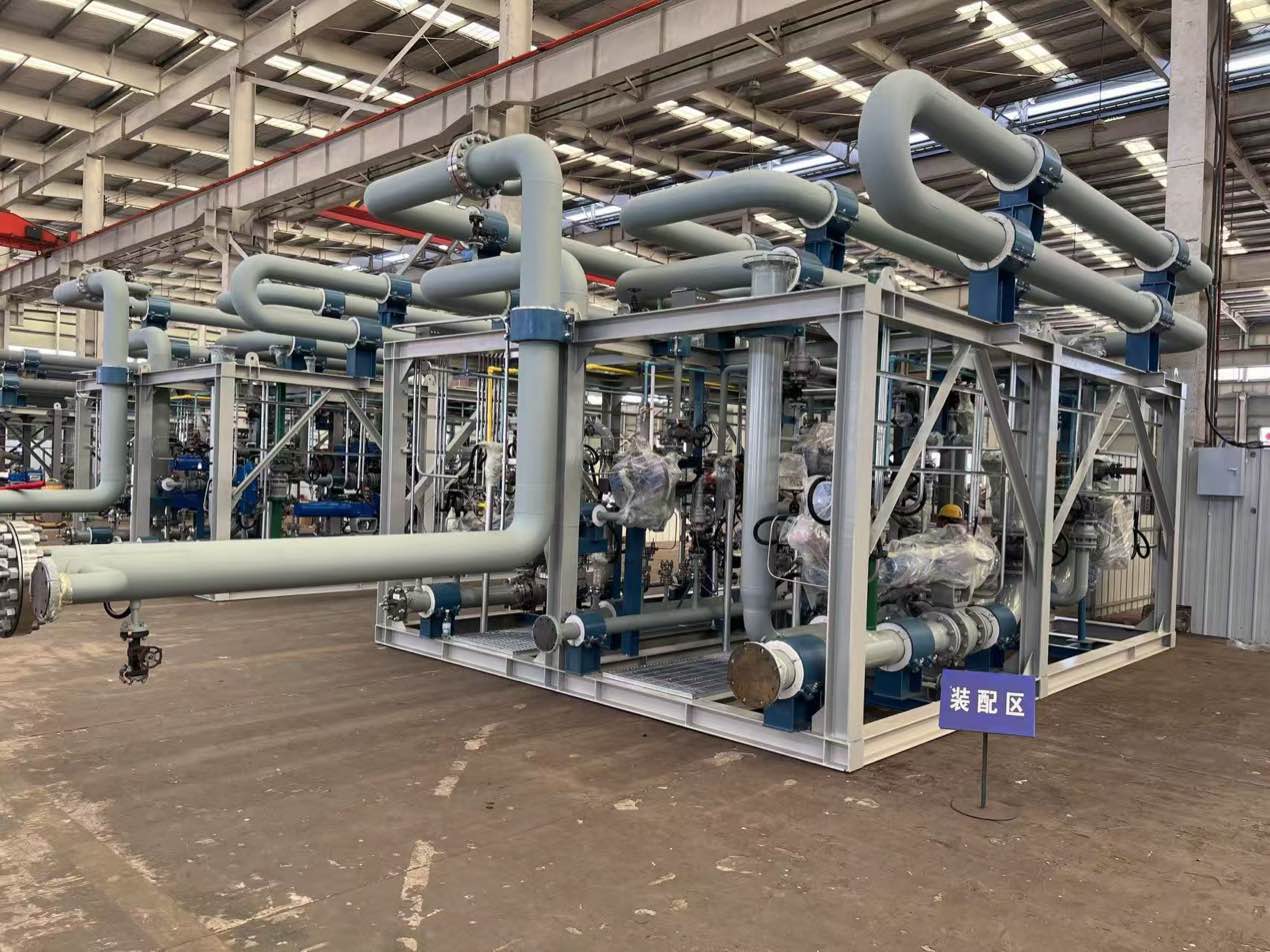
This case covers reduction furnace feed skid modules for a high-purity polysilicon upgrade and expansion project, with dozens of modules delivered within two months. The core value was not simply supplying several equipment sets, but moving complex field piping, valves, instrumentation, and steel-structure integration into the factory as early as possible.
Project Background / Risks and Challenges
Why the customer needed skid-mounted modules
The project was part of a 24,000-ton high-purity polysilicon upgrade and expansion. During this kind of expansion, the owner has to bring many reduction furnaces online in a short window, while keeping the process area clean enough to protect final product quality and support a higher conversion rate.
Tight production window
The site needed dozens of feed skid modules delivered within two months. Building valves, instruments, piping, and steel structure item by item in the field would have slowed the project and made the construction area more complex. Large polysilicon expansion projects need many furnace systems ready almost at the same time. A slow field build would put the production schedule under pressure.
Cleanliness risk
Reduction furnace piping is not just a support system. Its cleanliness has a direct bearing on final polysilicon quality and conversion rate, so the owner needed more work finished and checked before the modules arrived on site. Cutting, grinding, and open pipe work at site can bring dust and residue into the system. For high-purity polysilicon production, that is a real process risk.
Many interfaces in one area
Each skid included static mixers, control valves, flowmeters, temperature and pressure instruments, safety valves, rupture discs, pneumatic on-off valves, manual valves, piping, junction boxes, and air supply lines, so field coordination was not a simple task.
Solution / Results
Modular feed skid modules with clear field tie-ins
Sharp Eagle moved as much work as possible into the workshop. Each feed skid was built as a complete module, so site work could focus on lifting, positioning, and final connection.
Integrated process piping and equipment into each feed skid
Each feed skid brought together static mixers, control valves, flowmeters, temperature transmitters, pressure transmitters, safety valves, rupture discs, pneumatic on-off valves, manual valves, piping, steel structure, instrument cables, junction boxes, and air supply piping. Weeks: Field piping work compressed from a months-long job.
Kept fabrication and cleaning in the factory
Welding, assembly, cleaning, and dimensional checks were handled in a controlled shop environment, reducing the dust and residue risk that often comes with on-site cutting and fitting. Cleaner: Cleaner pipework supporting higher product quality and conversion rate.
Made site work simpler
The module was prepared around transportation, lifting, and tie-in needs, so the construction team could treat it as a ready skid instead of rebuilding the system piece by piece. More controlled: Site work, interface coordination, and start-up preparation became easier to manage.
Sharp Eagle Advantages
Tailored project solution
We define the feed skid scope around the customer’s process conditions, site limits, delivery window, and quality requirements.
Clean production base
Welding, assembly, cleaning, and inspection are completed in a professional workshop environment with better quality control.
Fast delivery
Moving more work into the factory reduces site workload and helps the customer reach installation and commissioning sooner.
Reliable service
Our team supports communication, drawing review, manufacturing follow-up, delivery coordination, and after-sales response.
Want more details or have a similar skid project?
Tell us your project requirements, such as P&ID, process conditions, site limits, and delivery schedule. We will review your needs and provide a tailored skid-mounted module solution.