Project Case Study
Dibenzyltoluene LOHC Hydrogenation and Dehydrogenation Pilot Unit
This project was used for engineering validation of liquid organic hydrogen storage technology, based on the dibenzyltoluene LOHC route. Based on the customer's process package, Sharp Eagle completed detailed engineering, skid spatial layout, material flow optimization, piping and instrumentation integration, and factory-stage manufacturing, inspection, and FAT testing, providing pilot-unit support for safe storage and transportation after hydrogen production from surplus power.
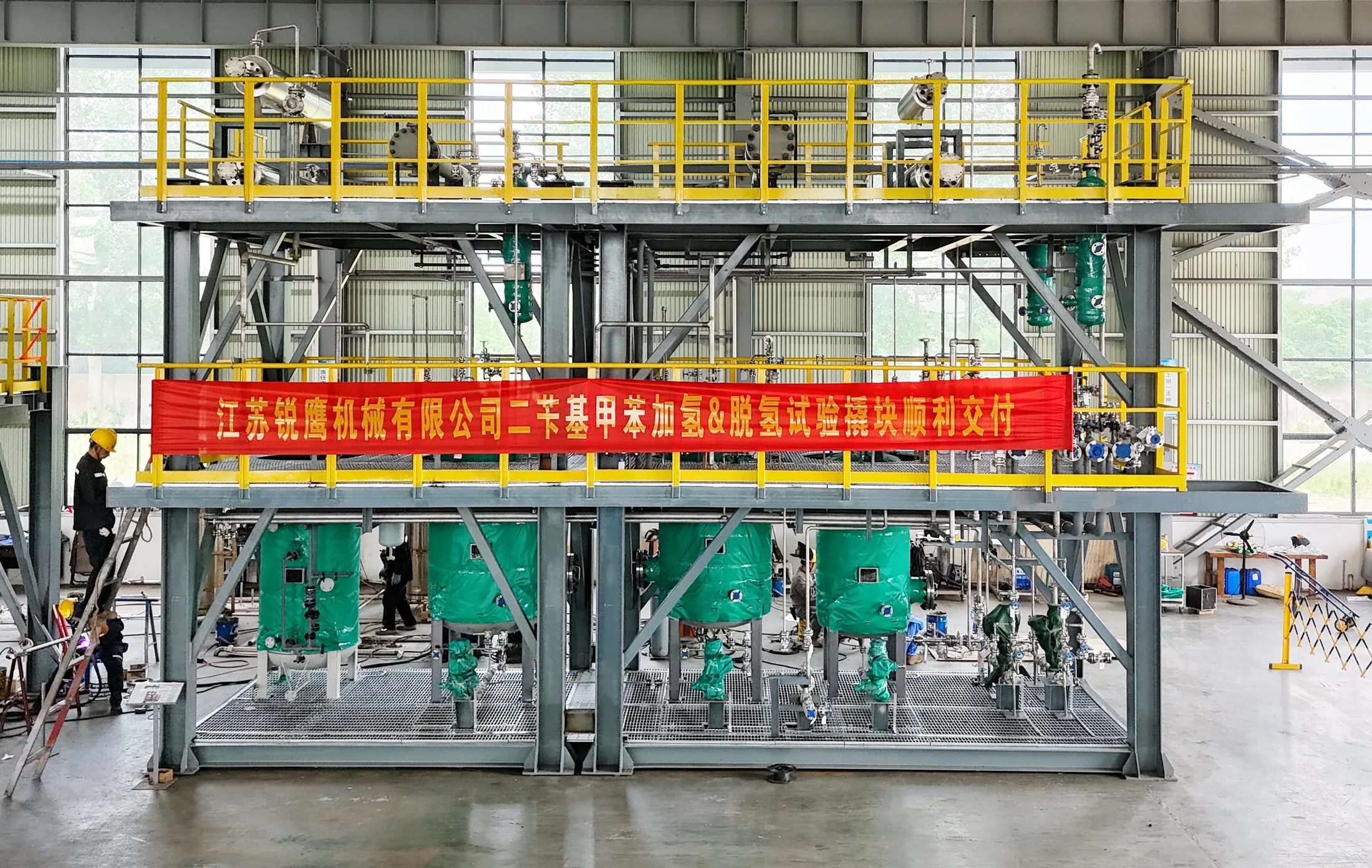
Delivery Site Photos
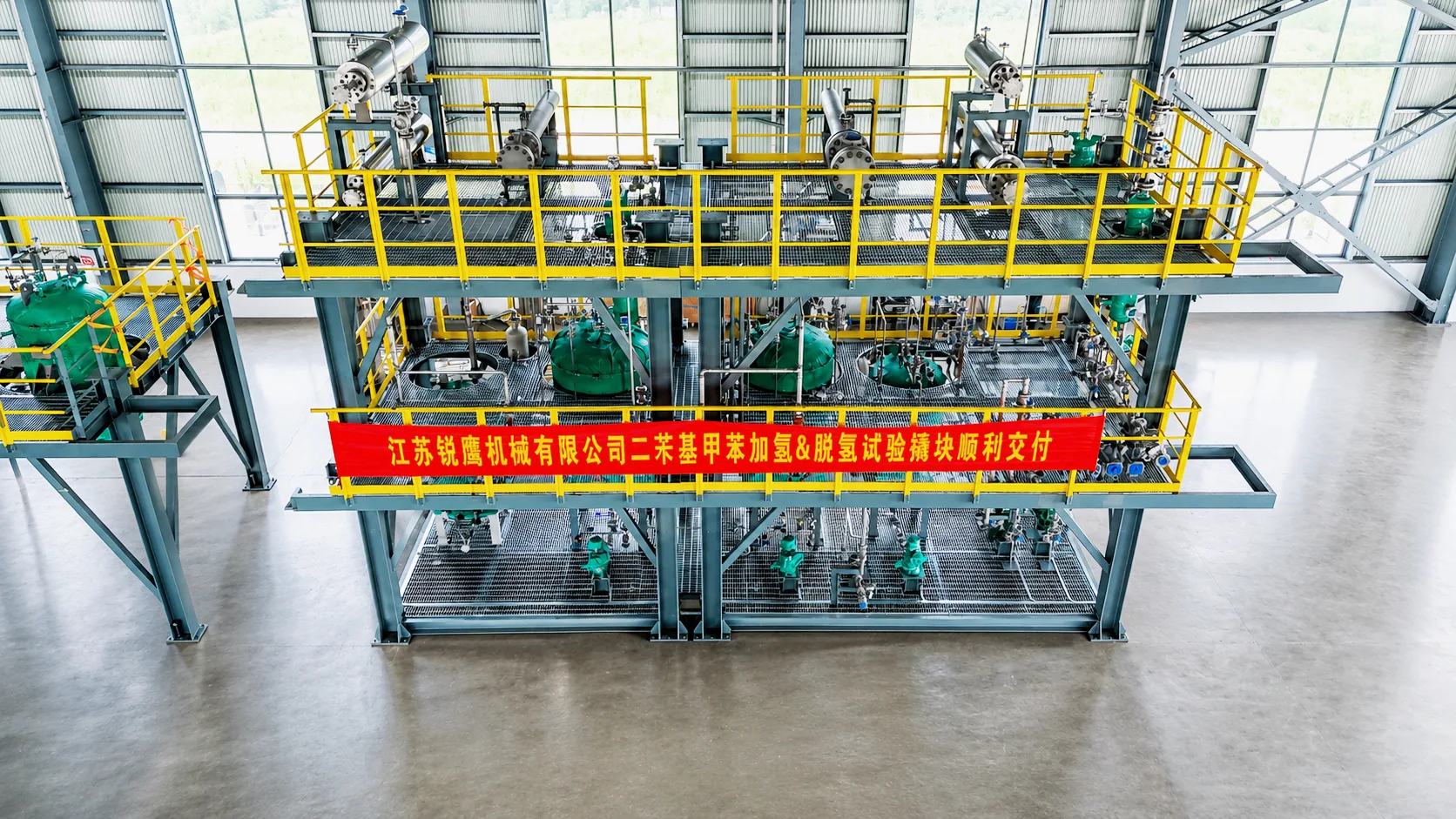
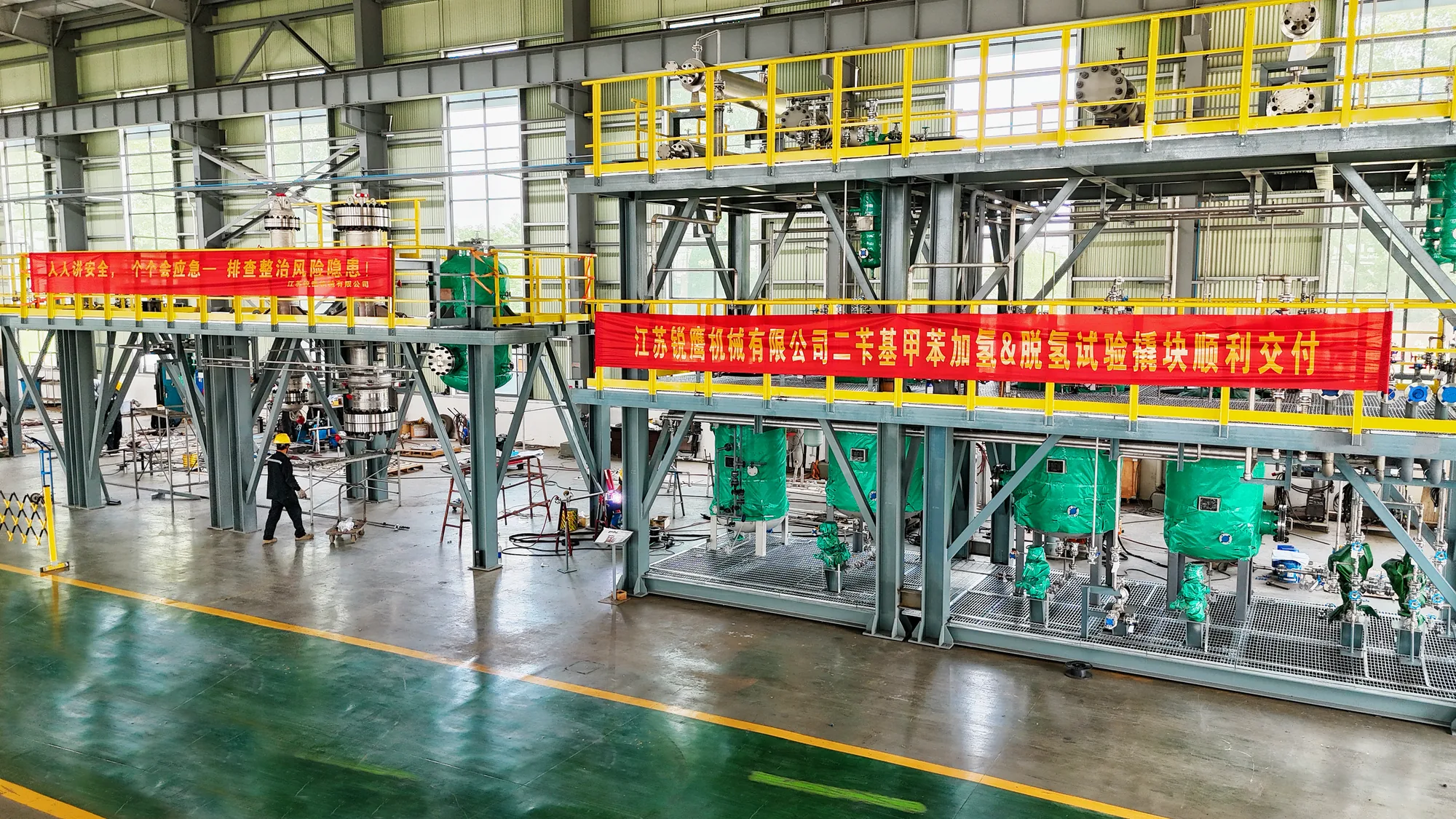
12.1 m x 3.8 m x 12.6 m
Project Background
Turning variable renewable power into a hydrogen carrier that can be transported safely
Renewable energy projects such as photovoltaic and wind power often face peak-generation surplus, limited grid absorption, and high energy storage costs. Using surplus electricity for water electrolysis to produce hydrogen is an important energy conversion route. However, hydrogen itself is flammable and explosive, and direct high-pressure storage and transportation place high requirements on safety, cost, and the logistics system.
Surplus power needed a long-duration energy storage outlet
During peak photovoltaic and wind output, some electricity cannot be absorbed in time. If a project relies only on traditional electrochemical storage, investment and capacity pressure can be significant. Water electrolysis for hydrogen production can convert this electricity into energy that can be used across time periods and regions.
Direct hydrogen transport creates safety and cost pressure
High-pressure hydrogen storage and transportation require high-pressure vessels, dedicated transport equipment, and strict safety management. For medium- and long-distance, large-scale transportation, the safety envelope, single-vehicle carrying capacity, and total cost can all restrict project implementation.
The pilot skid turned the technical route into equipment
Dibenzyltoluene is a liquid organic hydrogen carrier. The project needed an operable hydrogenation and dehydrogenation pilot skid that integrated reactors, catalyst operating conditions, process piping, valves and instruments, platform structure, and control interfaces into one unit, validating the feasibility of moving liquid organic hydrogen storage from laboratory route to engineered equipment.
Process Route
How this skid-mounted unit validates hydrogenation and dehydrogenation
The focus of this unit was not manufacturing a single piece of equipment, but turning the customer's process package requirements for hydrogenation, dehydrogenation, circulation, testing, and control into an operable, testable, and deliverable skid-mounted system. Catalysts are installed inside the reactors, and the piping, valves, instruments, and platform layout all serve the pilot validation process.
Feed and hydrogenation reaction unit
After hydrogen and dibenzyltoluene organic liquid enter the skid, they pass through metering, regulation, and reactor interfaces into the hydrogenation reaction section. This unit focuses on keeping flow, pressure, temperature, and valve status controllable before materials enter the reactor, providing stable conditions for catalyst evaluation.
Organic liquid circulation and intermediate treatment unit
Inside the skid, the system needs to manage transfer, buffering, and switching between hydrogen-rich organic liquid and dehydrogenated organic liquid. Piping layout, equipment levels, platform access, and instrument locations all serve the pilot process, making observation, sampling, adjustment, and maintenance easier for operators.
Dehydrogenation reaction and testing linkage unit
After the hydrogen-rich organic liquid enters the dehydrogenation reaction section, it releases hydrogen, and the dehydrogenated organic liquid then enters the subsequent circulation process. Temperature, pressure, flow, and key interfaces are linked through instruments and the control system, helping the customer validate dehydrogenation performance, catalyst behavior, and process package parameters.
Manufacturing Challenges
The medium is hydrogen and the pipes are small, so manufacturing details cannot be handled roughly
The dibenzyltoluene hydrogenation and dehydrogenation pilot unit involves hydrogen medium, small-diameter process piping, catalytic reactor interfaces, and many instrumentation control points. Meeting the process piping requirements was not only about installing equipment on a frame; it required controlling welding, inspection, cleaning, sealing, and commissioning.
Small-diameter process piping
Small pipe diameters make fit-up space, welding heat input, bevel quality, and post-weld cleaning more sensitive. Local deviation can affect flow stability, instrument pressure tapping, and later maintenance.
Hydrogen medium safety requirements
Hydrogen molecules are small, prone to leakage, and flammable and explosive, placing higher requirements on weld quality, sealing surfaces, valve selection, leak detection, and instrument interlocks.
High-density skid integration
The large module contains equipment, piping, instruments, cables, platforms, and maintenance access at the same time. The layout had to balance process sequence, operating reachability, lifting and transportation, and site interfaces.
Quality Assurance
Quality control around hydrogen medium and pilot validation
This unit focused on hydrogen sealing, small-diameter piping, instrument linkage, and FAT testing, with the key goal of ensuring that later commissioning data would be stable and reliable.
Hydrogen sealing inspection
Valves, flanges, welds, and instrument interfaces were inspected carefully to reduce hydrogen leakage risk.
Small-diameter process control
Fit-up, welding, cleaning, and purging were controlled to reduce foreign matter and local deviation.
Instrument loop inspection
Temperature, pressure, flow, and control signals were checked item by item to ensure the pilot process could be monitored.
FAT test records
Pressure, sealing, electrical, and functional tests were completed in the factory stage, with delivery records prepared.
Have a similar hydrogen energy, liquid organic hydrogen storage, or catalytic reaction skid project?
Send us your process package, P&ID, equipment list, piping class, medium properties, size envelope, control requirements, and acceptance standards. Sharp Eagle will combine process, equipment, piping, steel structure, electrical and instrumentation, and manufacturing inspection capabilities to evaluate a suitable skid detailed-engineering and delivery solution.